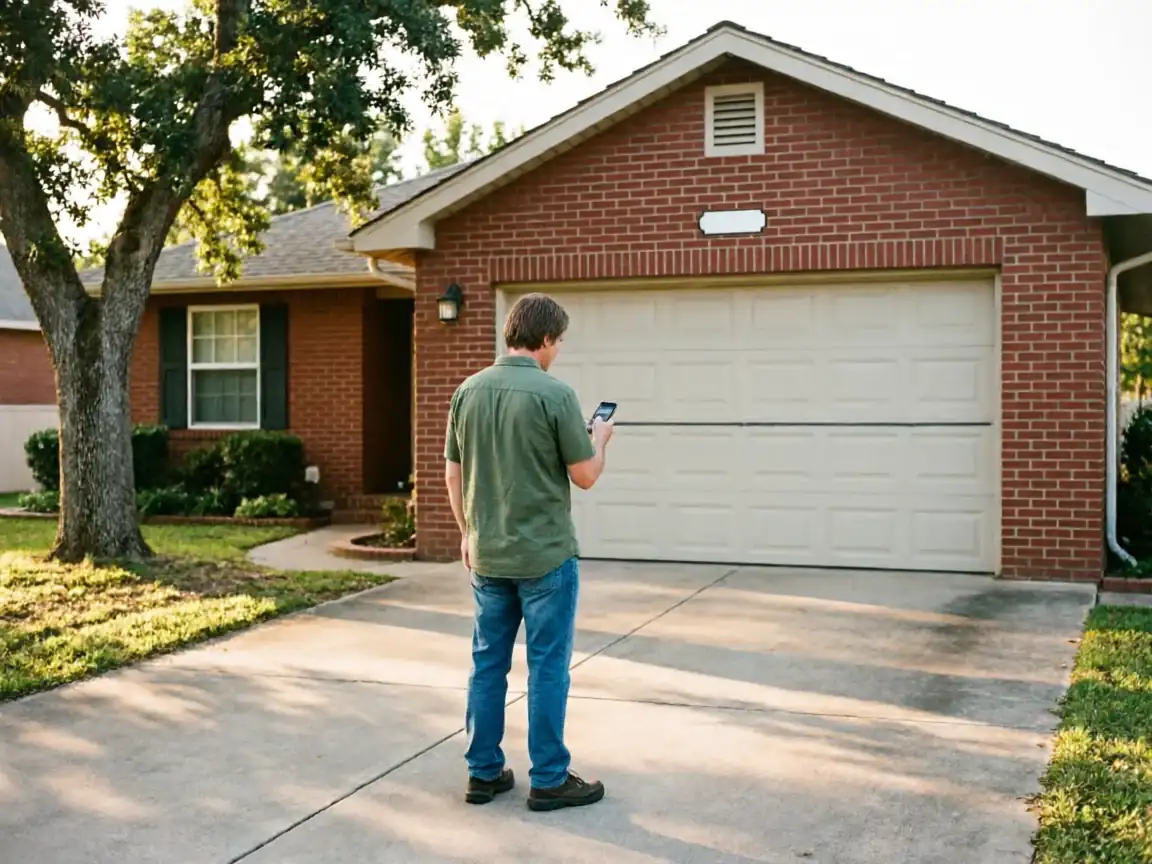
How We Fix It
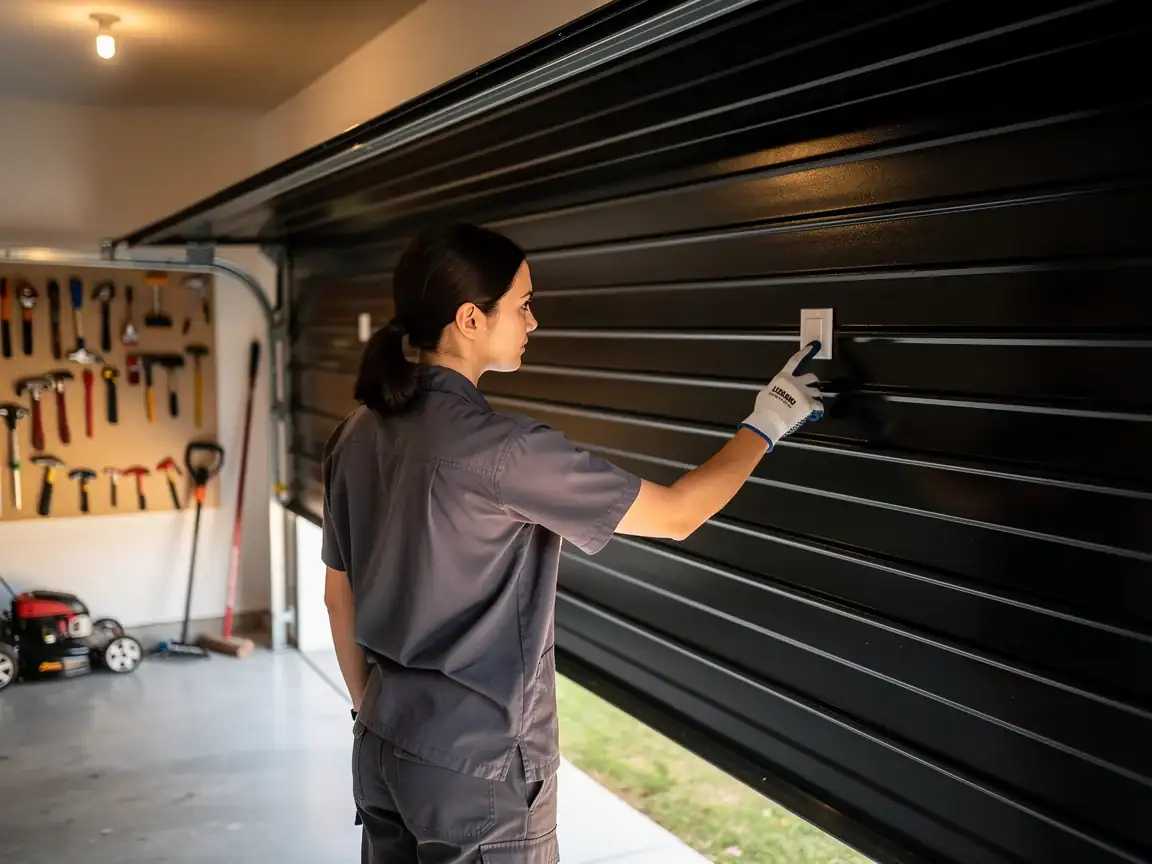
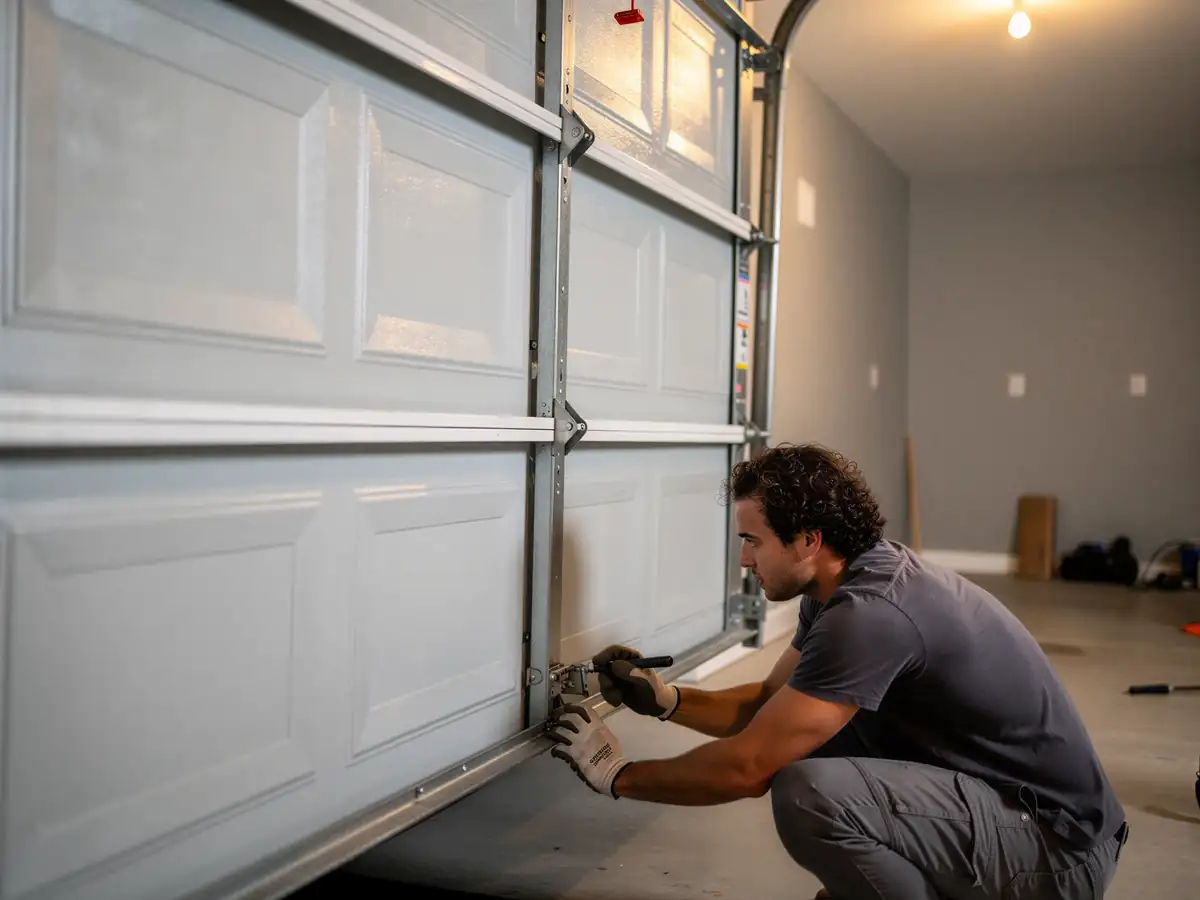
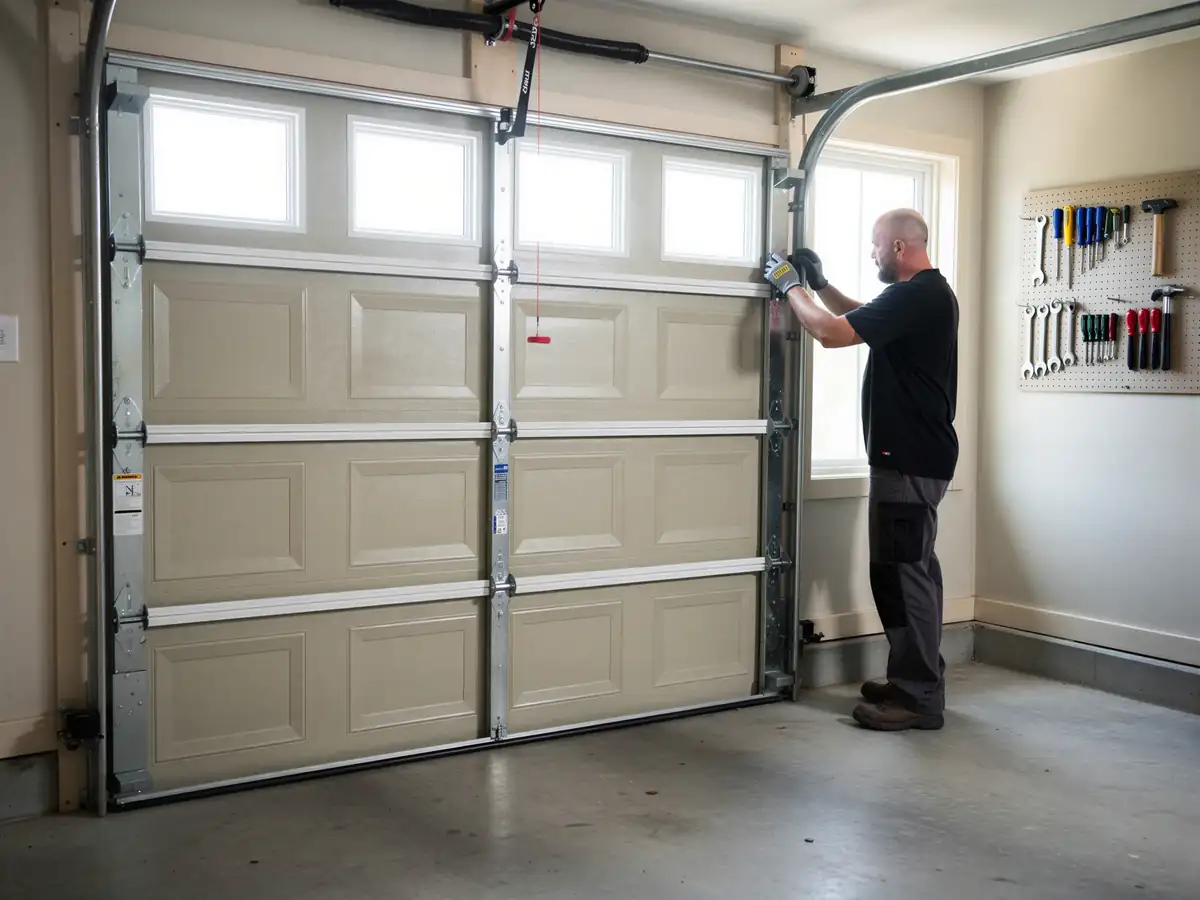
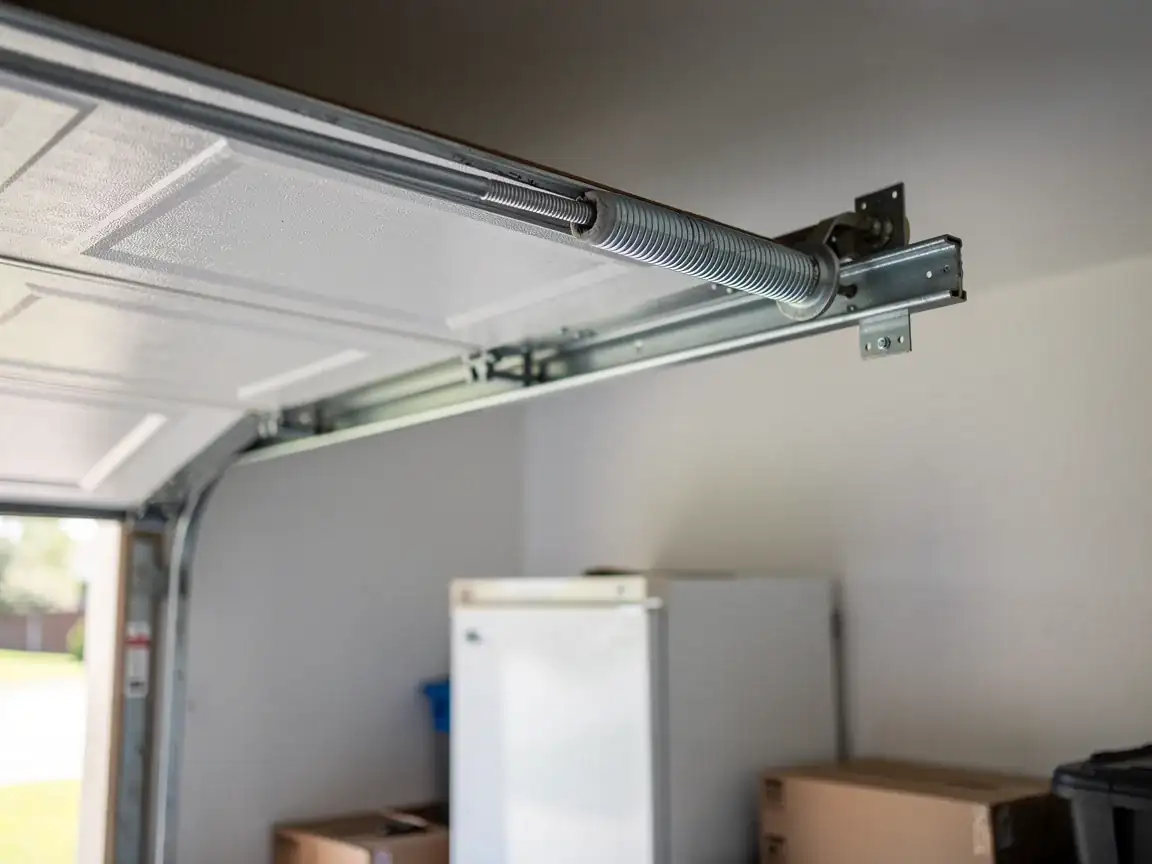
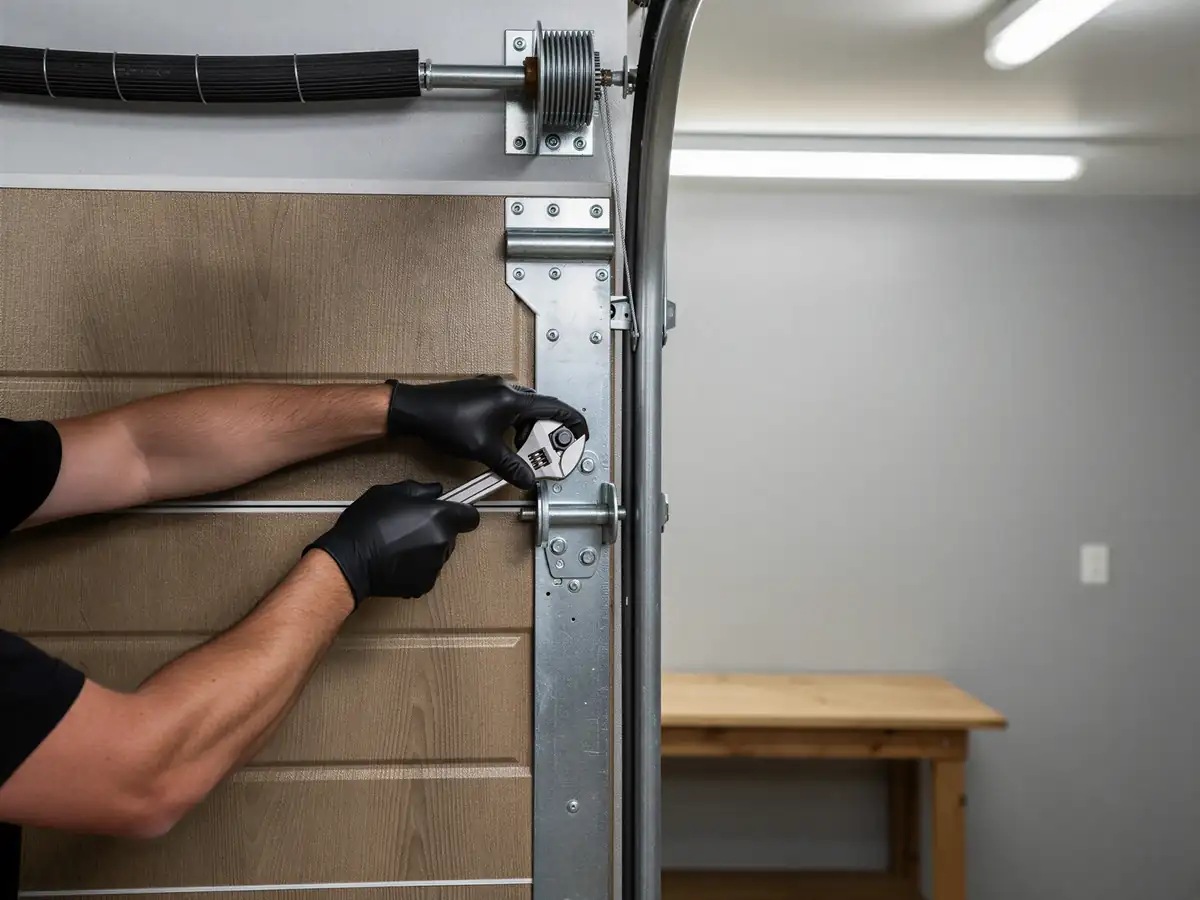
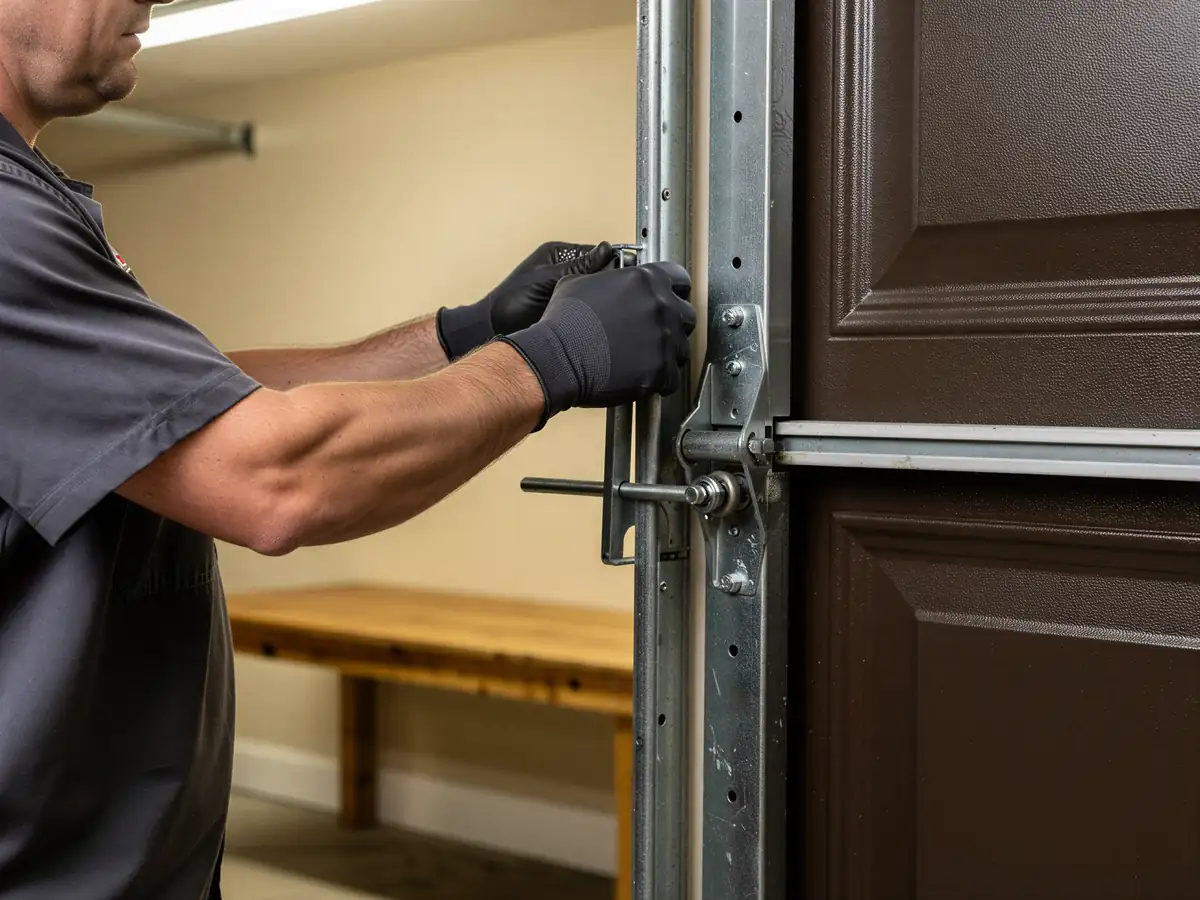
When a door jumps its track, the first thing we do is kill power to the opener so nothing tries to move while someone's hands are near the rollers. Then we look at where the track actually separated from the wall or jamb bracket, because that tells us whether this is a bent track, a snapped cable, or just rollers that walked out of a worn channel.
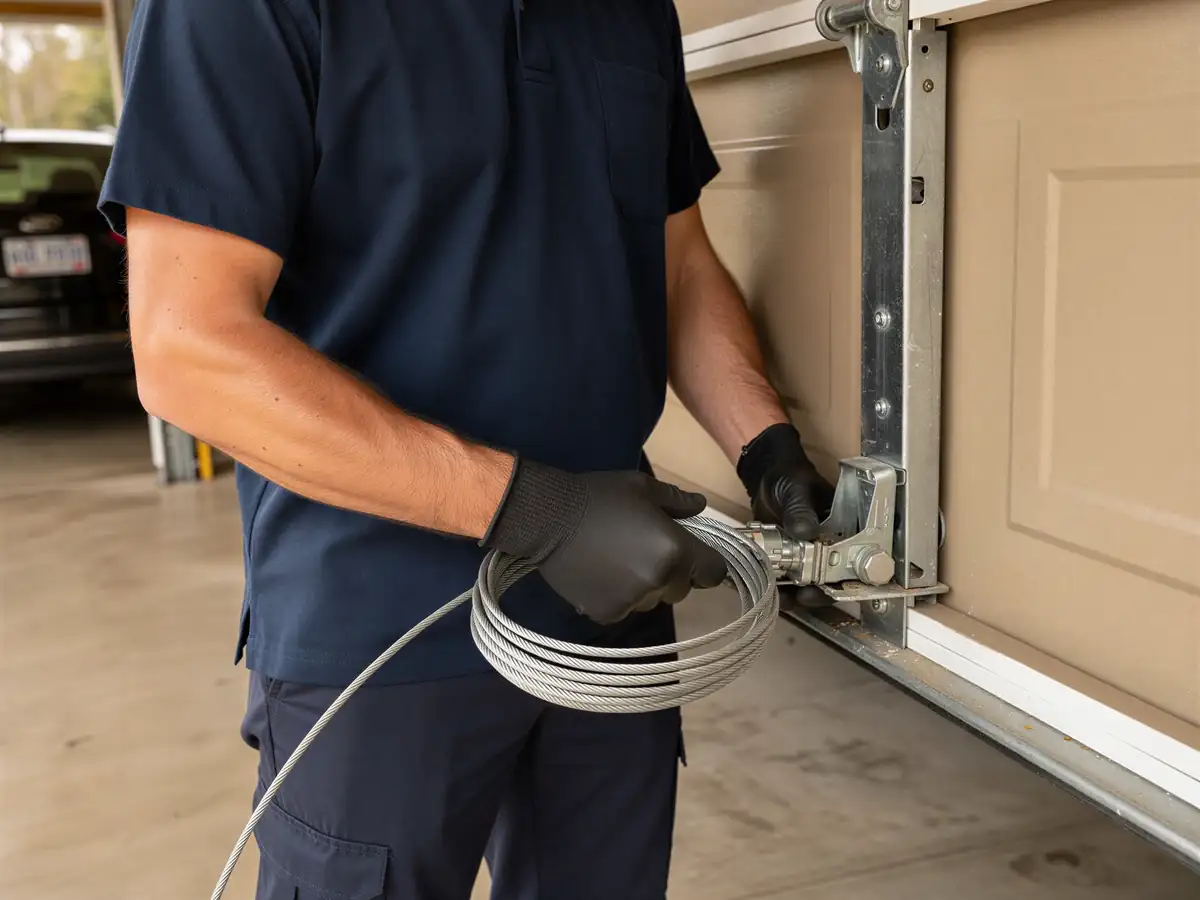
Most of the time on a door built to the kind of hardware common in homes from the 1956-2011 range this area was built in, the fix is re-seating the rollers, straightening or swapping the bent section of track, and re-tensioning the cables so the door tracks evenly on both sides. If the track is bent at a sharp angle rather than just pulled loose, we replace that section instead of bending it back - bent steel that's been forced straight again fails sooner, and we won't charge you twice for the same repair in six months.
Here's the limitation worth knowing: if the panel itself is dented or torqued from whatever knocked the door off track, straightening the track won't fix a door that still won't sit flush. At that point we'll tell you straight whether it's a panel swap or whether the full door's had it, instead of patching around a problem that's going to come back.
How Long It Takes
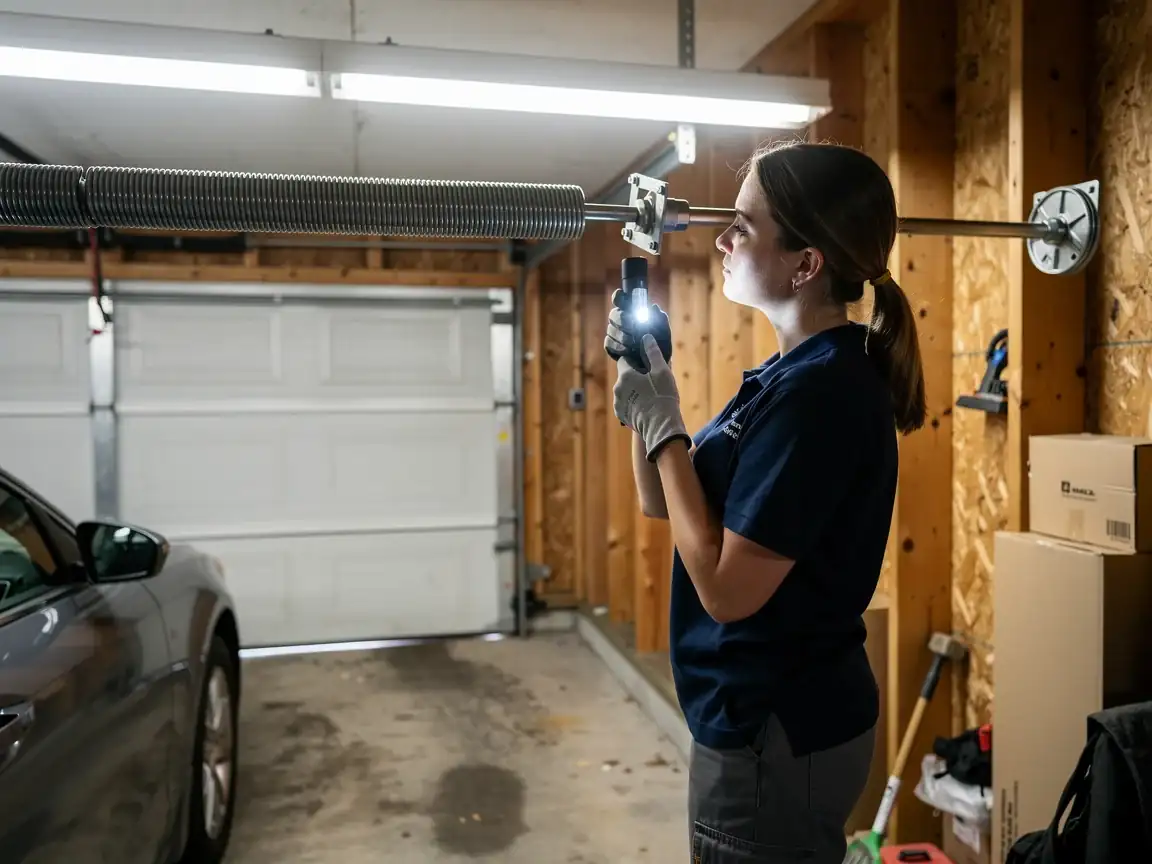
An off-track door is rarely a quick snap-back job the way people picture it. We start with a full check of the track, rollers, cables, and the hinges at every joint, because a track that's out of alignment is frequently a symptom of a cable that's frayed or a roller that's cracked, not the actual root cause.
Straightforward cases - rollers out of the channel, track knocked loose at one bracket - get back together the same visit once we've confirmed nothing else is compromised. Doors with a bent track section, a broken cable, or hardware that's rusted enough to need full replacement take longer, because that hardware often isn't something we carry on the truck in every size and has to be matched to the door.
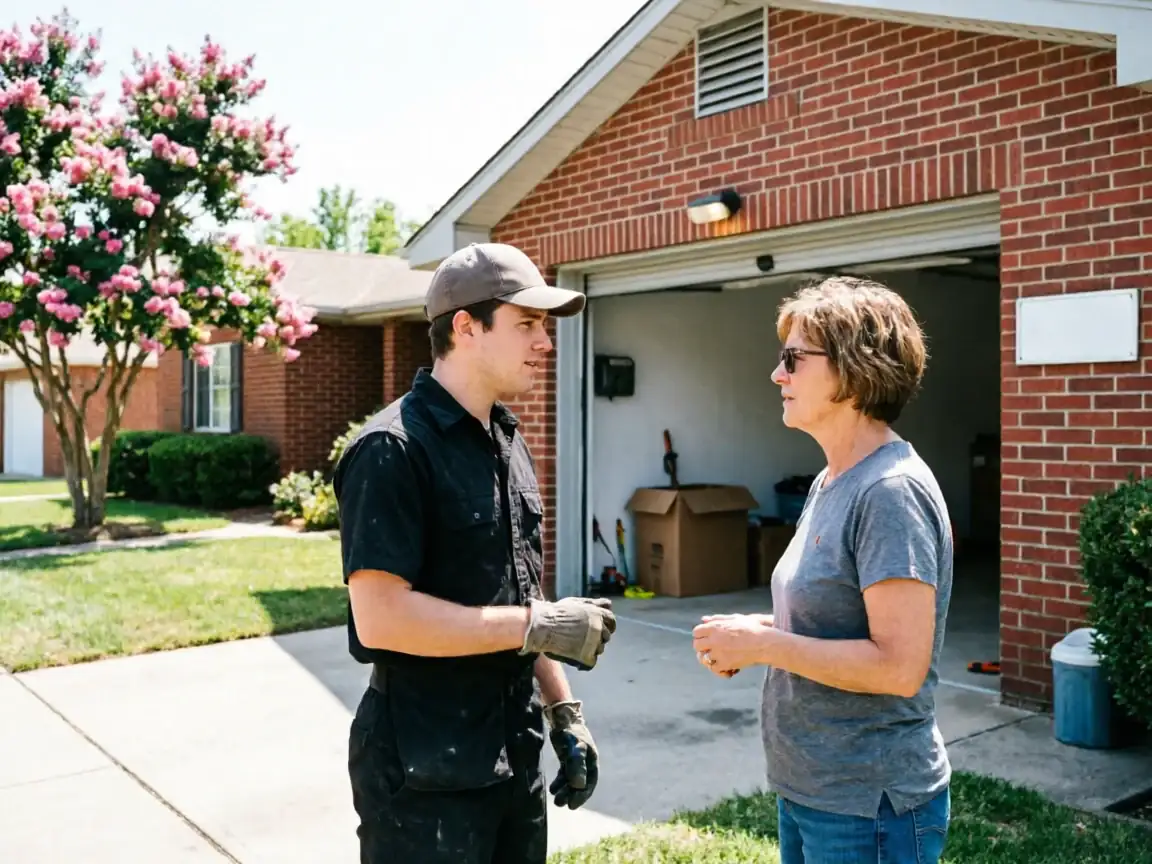
We won't quote a universal timeline here because it depends on what we find once the door's open, not on guesswork. What we will do is tell you on-site, after the inspection, what's actually wrong and what it takes to put it right - not a generic estimate that assumes your hardware matches everyone else's.
How It Shows Up
An off-track door doesn't usually announce itself all at once
It starts as a door that binds partway up or down, or one side that lags behind the other so the door looks slightly crooked as it travels. You might hear a grinding or scraping sound right as it passes a certain point in the track, which is usually a roller riding on the edge of the channel instead of inside it.
In worse cases the door stalls completely
With one side of the bottom panel pulled a few inches out of the frame while the other side sits normal. If you try to force it with the opener at that point, you risk bending the track further or putting enough strain on the opposite cable that it lets go too. Visible gaps between the bottom panel and the track, a door that won't seal flush against the slab, and a section of track that's visibly pulled away from its wall bracket are the clearest signs to stop using the opener and have it looked at before it gets worse.
Why This Fails Locally
This service area's housing stock runs from 1956 up through 2011, with the median build landing around 1984, and across the 23 named communities in this territory most of what's standing dates to the 1980s and 90s. That matters because a lot of those garages still have the original steel track and roller hardware from that era, and three to four decades of use is enough for bolt holes to wear oval and brackets to work loose even without any single dramatic event causing it.
The climate band here is mild with occasional freezes, which isn't severe enough to crack concrete slabs the way a hard freeze-thaw region would, but it's enough temperature swing across a year that metal brackets expand and contract and slowly back their lag screws out of the jamb. Add humidity, and those same fasteners rust at the threads, so a bracket that looks tight can still let go under a normal amount of door travel.
Across the service area's roughly 44,440 owner-occupied houses, a door that's quietly drifted out of alignment over years - not one that failed suddenly - is one of the most common calls we take, which tracks with housing this old sitting on hardware nobody's replaced since it went in.