How to Book
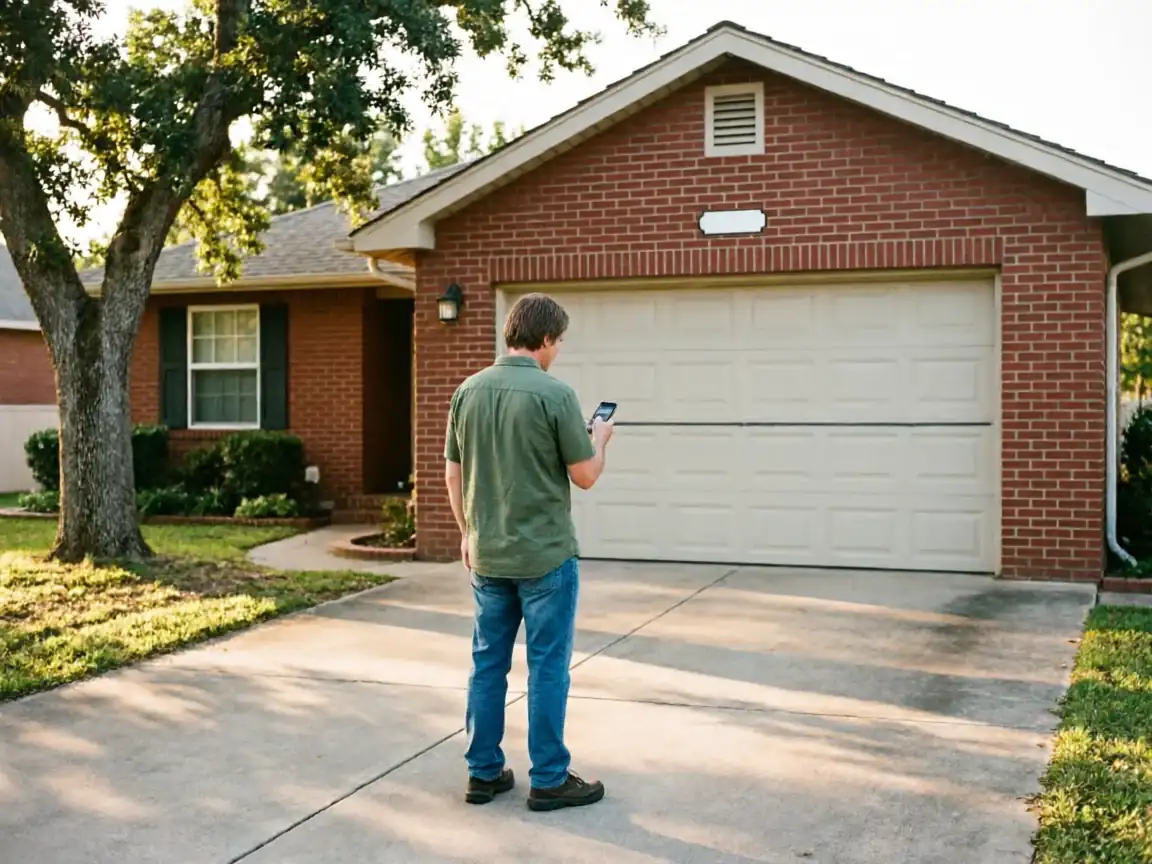
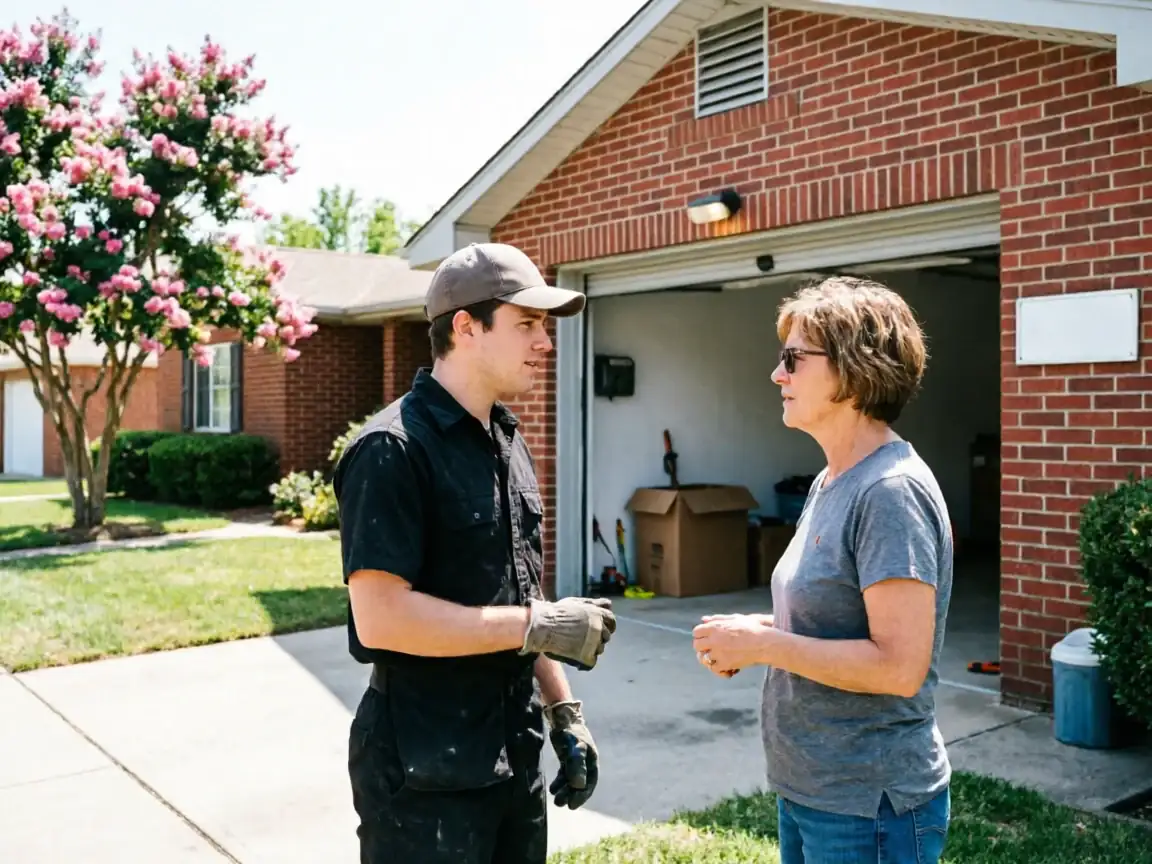
Call and tell us the door is off its track - which side, and whether it's hanging crooked or just won't budge. We drive out from La Porte, about 4 miles up the road, so we're not guessing at what a Deer Park garage looks like before we get there. Most of these houses were built around 1981, which tells us a lot about the door and track setup before we even pull in the driveway. You can also check the coverage page for Deer Park to confirm we run this route, or read the broader write-up on off-track repair out of La Porte for how the job itself works. On the phone, we're mainly trying to find out if a cable snapped or if a roller just walked out of the channel - that changes what we bring.
How It Shows Up
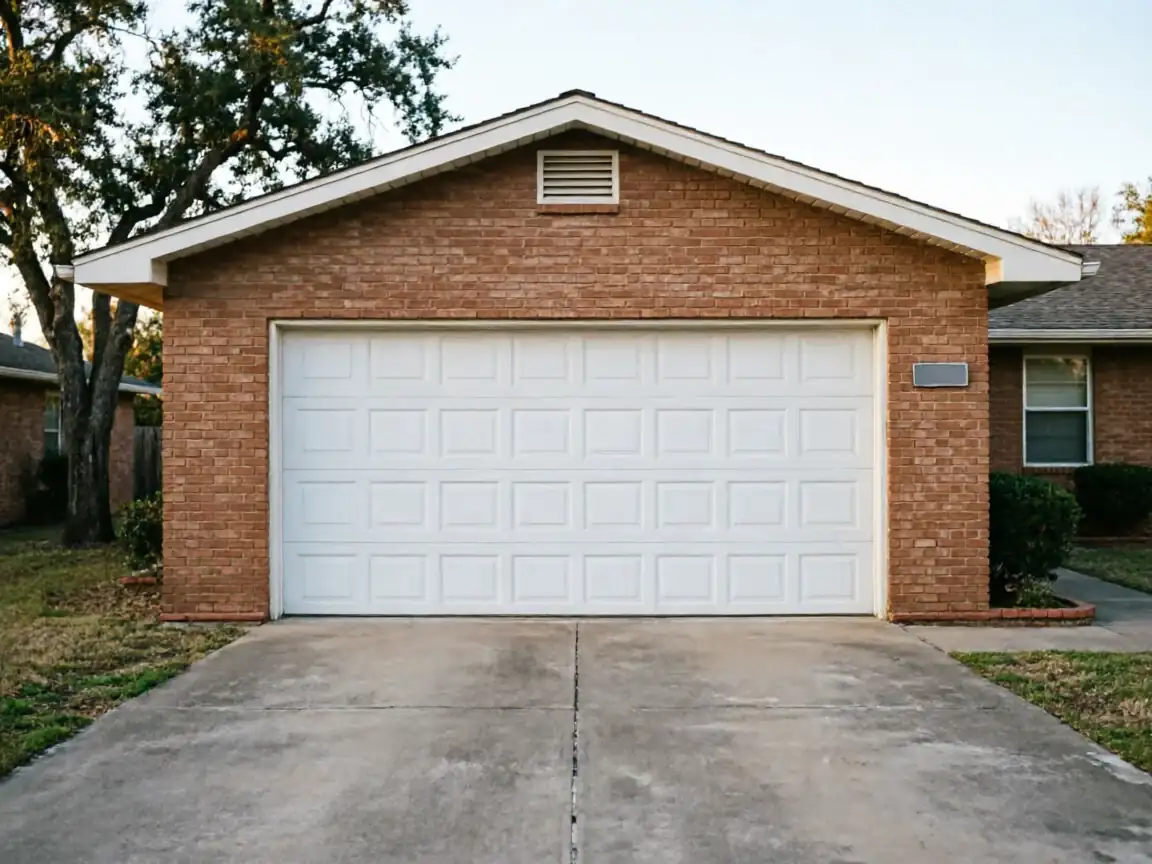
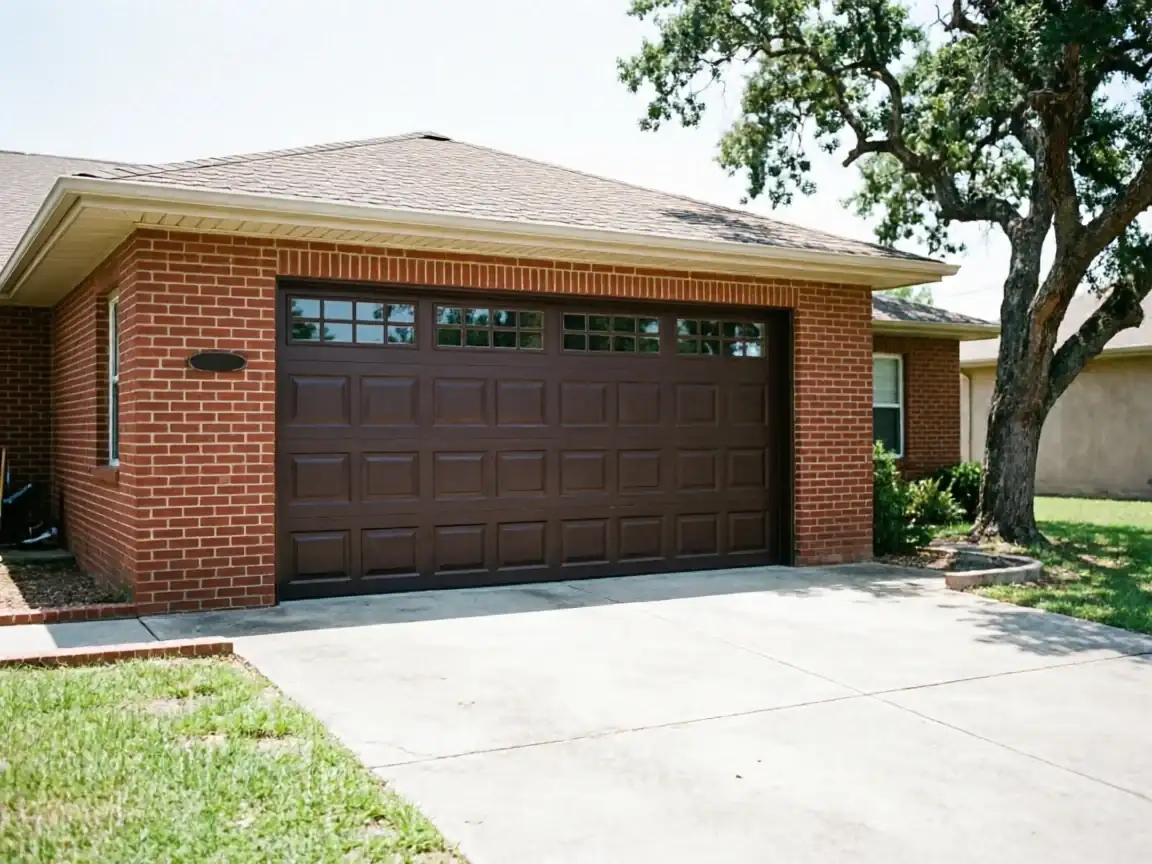
A Deer Park door built around 1981 is almost always a single-layer steel panel on steel tracks that were sized tight to the door, not to today's wider rollers. When one of those panels jumps the track, it doesn't ease out gently - it kicks sideways at the bottom corner because the track gauge leaves no slack to absorb a bent roller stem or a loose track bracket. You'll see the door sitting crooked in the opening, one bottom corner low, or hear a grinding scrape right as it starts to close. On a lot of these original or first-replacement doors, the track brackets were lag-bolted straight into framing that's now had forty-plus years to shrink and move, so the track itself has drifted out of true even before anything breaks.
Why This Fails Locally
Houses in this part of Deer Park went up mostly in the early 1980s, a window when steel doors shipped with lighter-gauge rollers and tracks than what's standard now. Forty years on, those original tracks have usually seen one or two roller swaps but never a track replacement, so the rail itself is often slightly bowed from decades of a heavier replacement door running through a channel sized for the original. Add in a climate that's mild with occasional freeze snaps, which stiffens old grease in the roller stems and track joints just long enough for a cold morning to be the day it finally jumps. None of that is dramatic weather - it's just old hardware meeting a door that's heavier than what the track was bent for.
How We Fix It
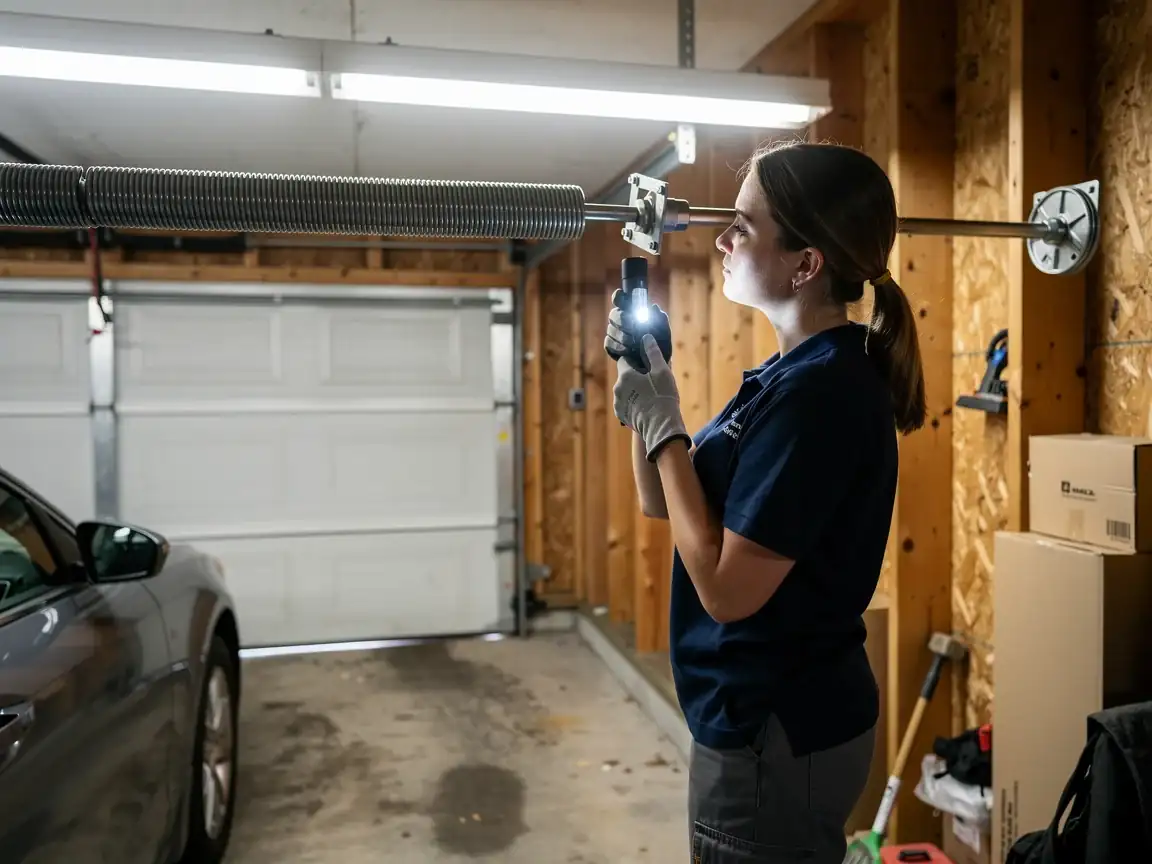
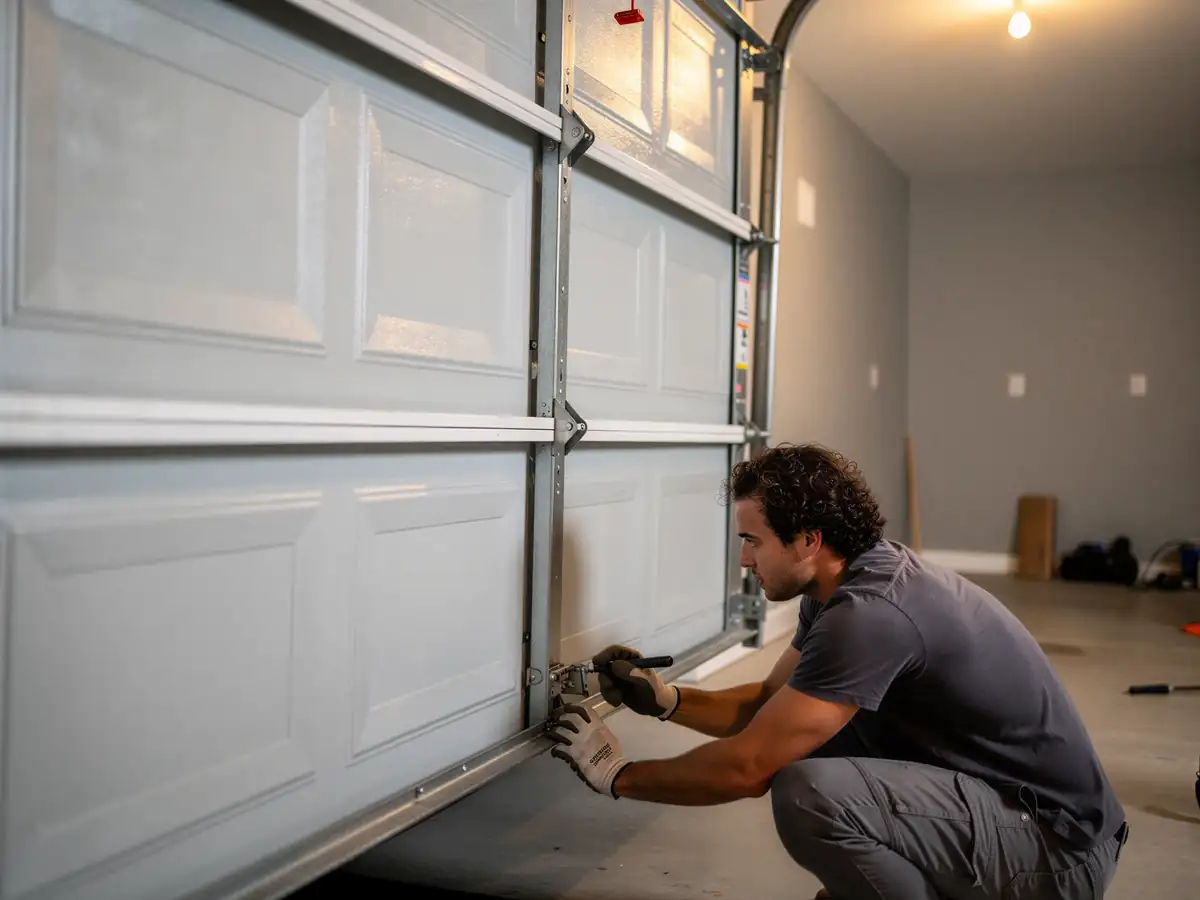
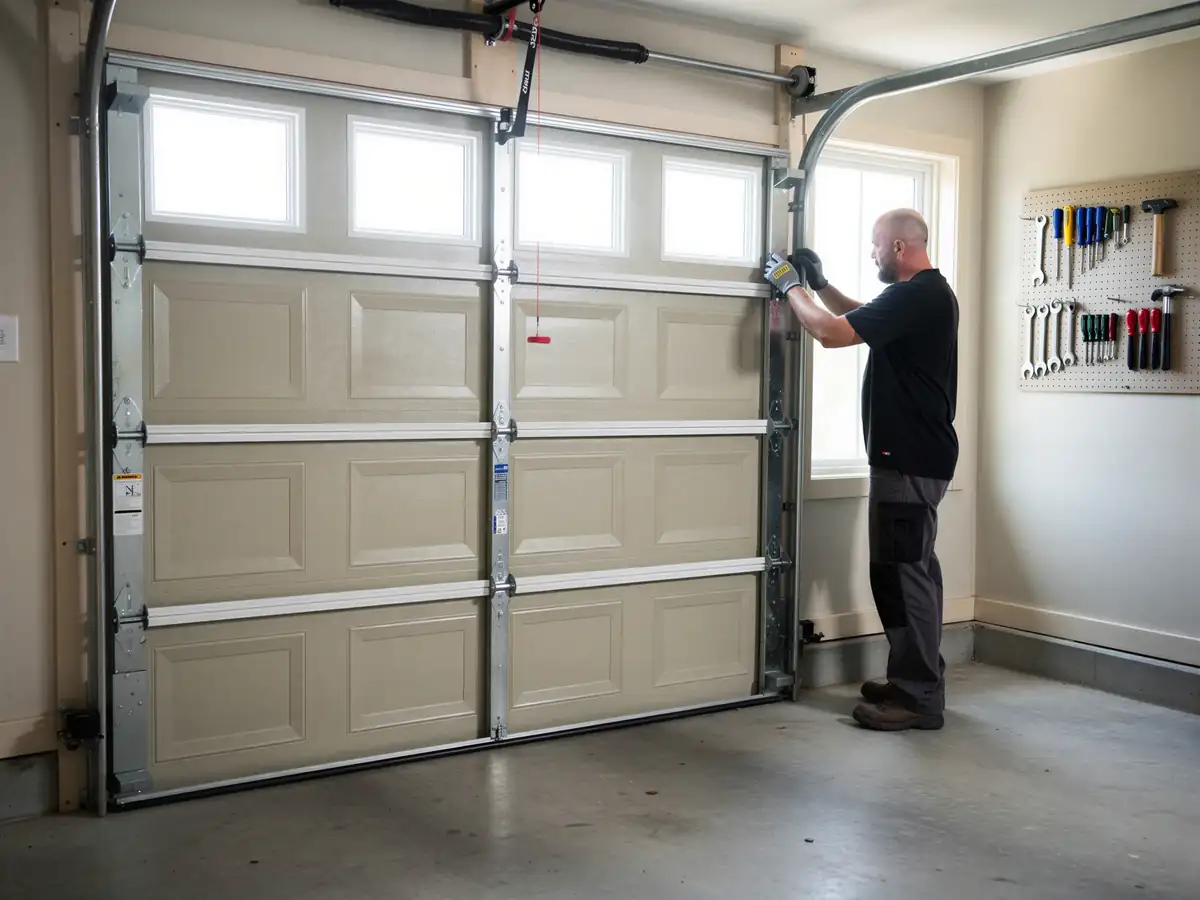
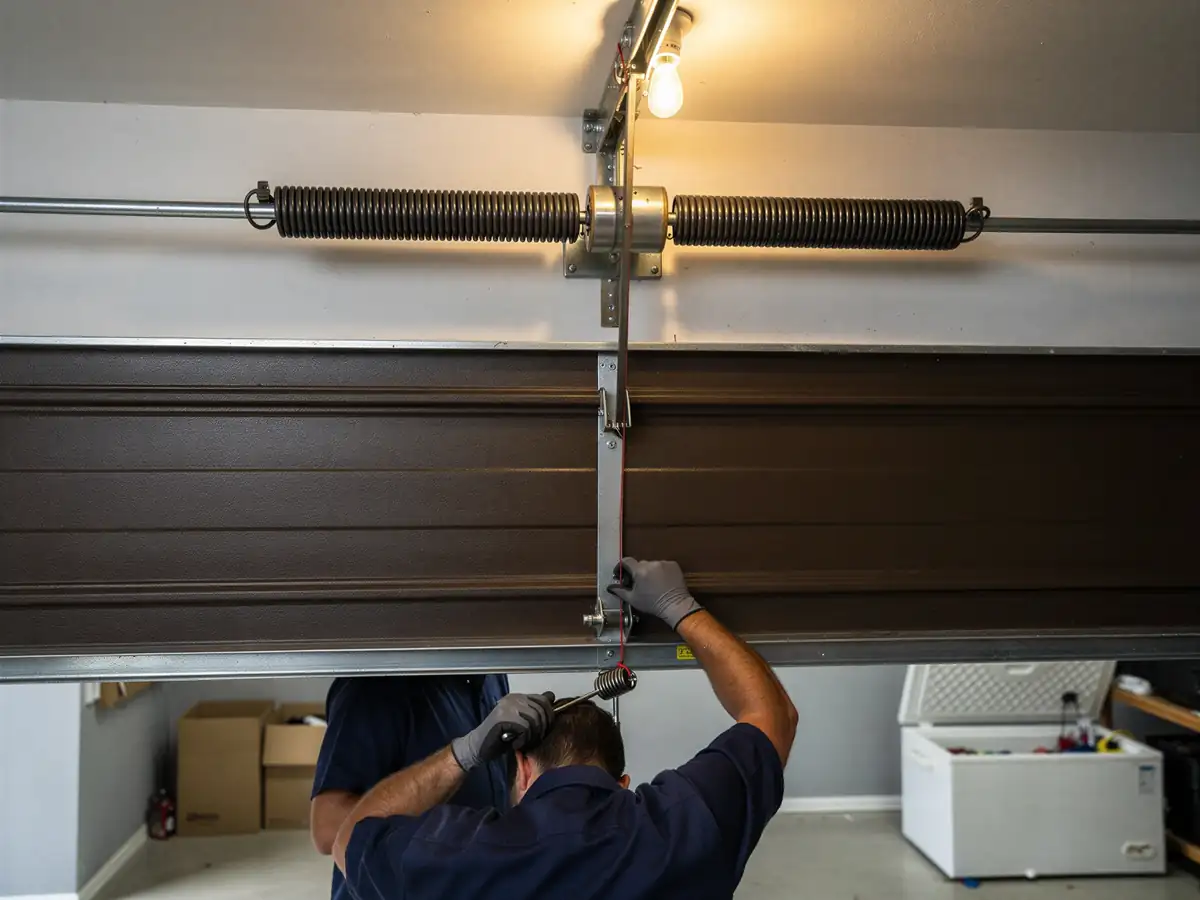
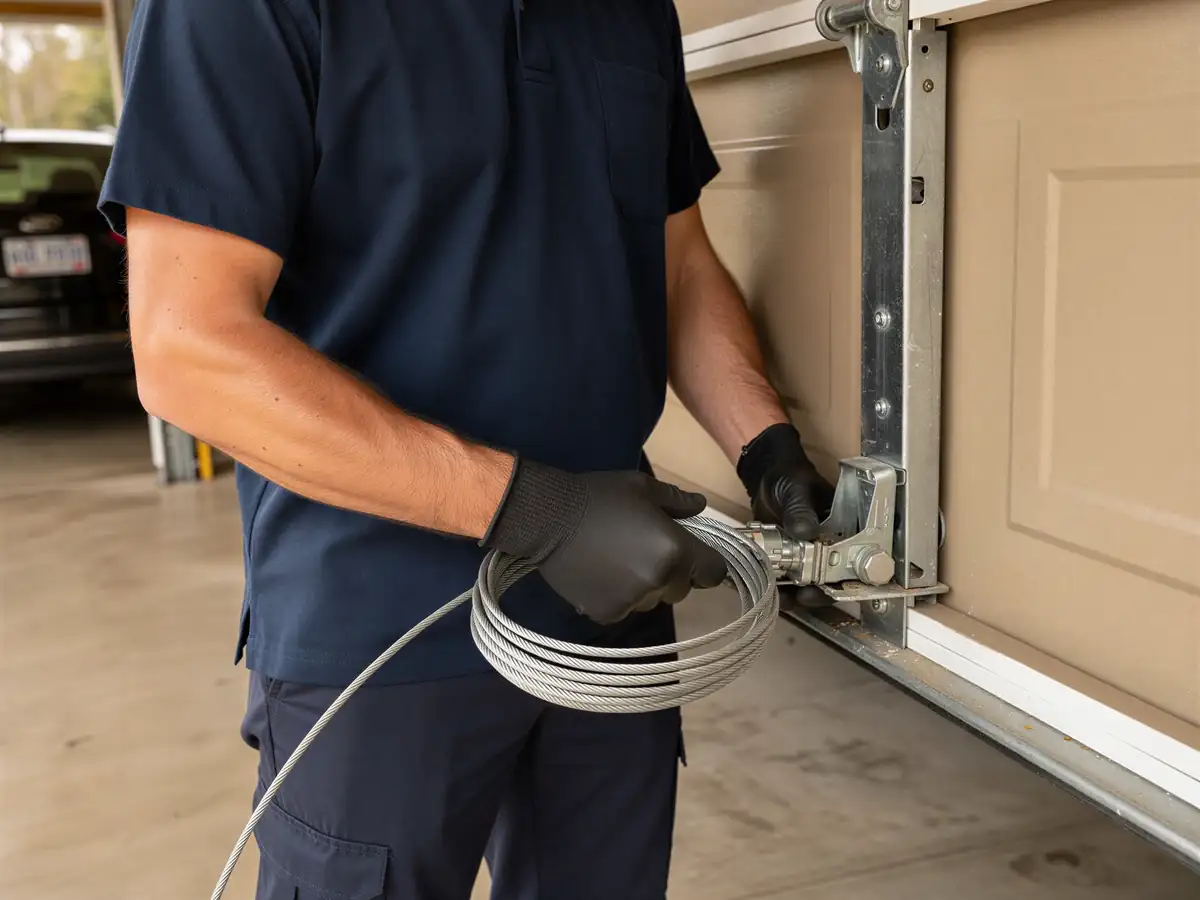
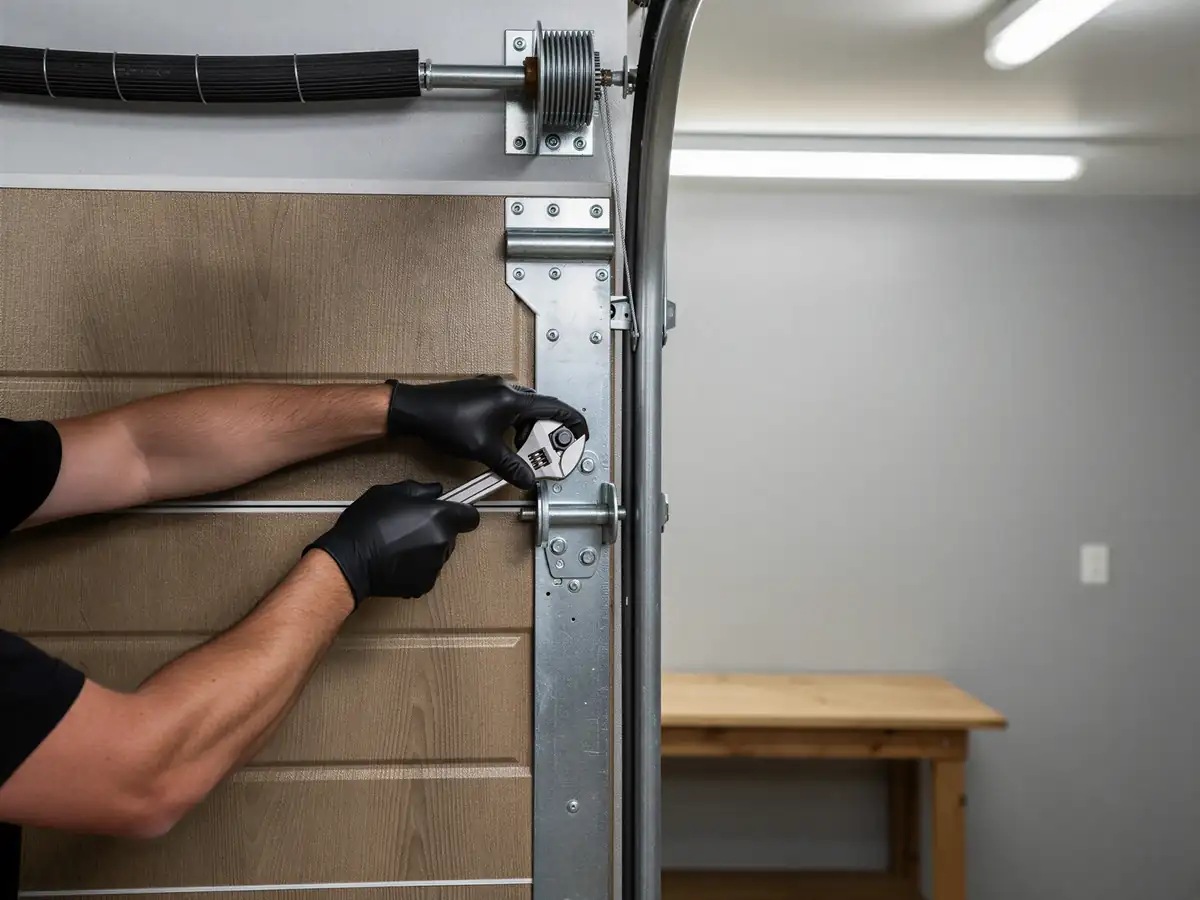
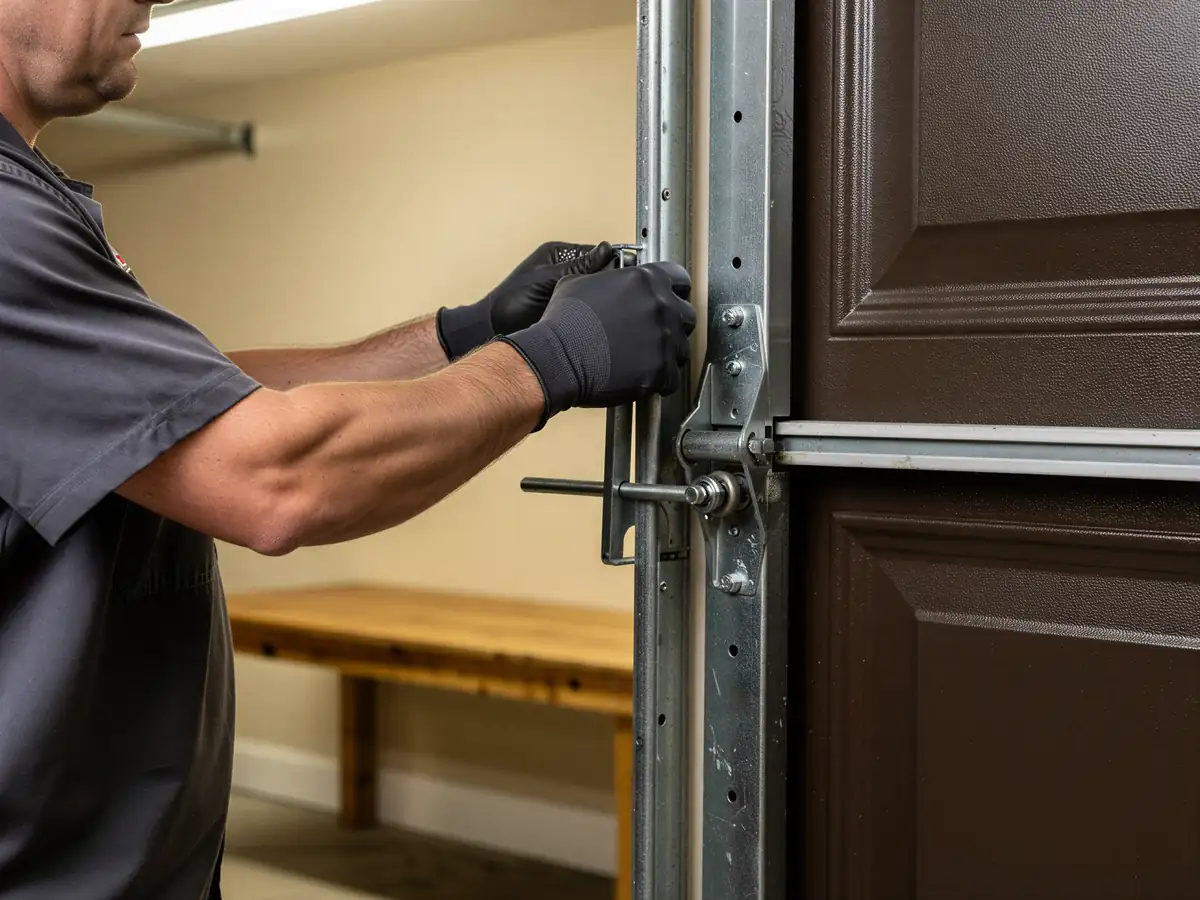
We start by checking whether the track bent from the door jumping it or whether a loose bracket let the whole rail shift - those are two different fixes. A bent section gets replaced rather than hammered straight; straightened track looks fine for a few weeks and then jumps again in the same spot. We reset the rollers, square the track to the jamb, and check the cable and spring tension while we're in there, since a door that jumped once on worn hardware is a candidate to do it again if the roller or cable is the real cause. One limit worth saying up front: if the track is original 1980s stock and badly pitted or rusted through at the bracket holes, patching it is a short-term fix - full track replacement is the honest call, and we'll tell you that instead of billing for a repair that won't hold.